Category: Articles

  • Mobile Application Development Platforms for Speed and Savings

    Mobile Application Development Platforms for Speed and Savings

    Ready to launch your disruptive idea? Stop coding, start conquering. You are the hero of this journey, and every hero needs the perfect tool. The single biggest trap founders fall into is wasting time and money on outdated strategies. This guide cuts through the chaos and delivers a clear, professional breakdown of today’s top mobile application development platforms.

    I’ll show you how to leverage a single codebase for speed, cost reduction, and a wider talent pool. Read on to empower your decision and turn your vision into market reality!

    React Native is Your Single Codebase Superpower

    As a software engineer who helps visionaries launch cross-platform apps, I know your goal isn’t just to write code, it’s to disrupt markets, streamline workflows, and unite people. You are the hero of your growth story; think of me as your strategic partner handling the heavy lifting.

    When navigating today’s top mobile application development platforms, React Native is the ultimate secret weapon for your mission. For startups, it slashes time-to-market by enabling you to build for iOS, Android, and web simultaneously with a single, unified codebase. For larger organizations, it tears down team silos, allowing web and mobile engineers to speak the same language.

    The strategy perfectly aligns with current cross-platform app development trends. In fact, according to the Stack Overflow Developer Survey, React Native consistently ranks as one of the most widely used cross-platform frameworks globally, trusted by over 9% of all developers worldwide to build scalable, high-performing apps without the native price tag.

    Flutter

    As your dedicated engineering partner, my job is to build the tech while you focus on being the hero of your industry. Navigating today’s mobile application development platforms can feel overwhelming, so let’s break down another name in the game: Flutter.

    Backed by Google, Flutter is a versatile UI toolkit designed to craft visual apps for mobile, web, and desktop.

    Launch Fast, Conquer First

    In the startup world, speed isn’t just an advantage; it’s survival. That’s exactly why selecting the right mobile application development platforms is absolutely critical to your launch strategy.

    Time-to-market (TTM): The total amount of time it takes to bring a new product from a brilliant idea on a whiteboard into the hands of your actual users.

    Instead of paying two separate teams to build iOS and Android apps from scratch, frameworks like React Native let us write the code once and deploy it everywhere. It’s the ultimate hack for growth. Tracking with current cross-platform app development trends, this shared-codebase approach is dominating the industry.

    Black and white Lego character putting a coin into a piggy bank in a futuristic Lego city, symbolizing cost-effective investments using modern mobile application development platforms.

    Slash Your Launch Costs

    When you evaluate mobile application development platforms, the biggest financial trap is paying twice for the same app. Why hire completely separate iOS and Android teams when we can just build it once? Frameworks like React Native are absolute game-changers for resource reduction. By sharing a single, unified codebase, we slash development hours, cut down on redundant testing, and keep your capital exactly where it belongs: in your pocket.

    Tracking with current cross-platform app development trends, this isn’t just a clever hack; it is proven economics. According to a 2026 cost analysis by Octal IT Solution, choosing a cross-platform approach safely reduces overall development costs by 30% to 50% compared to building dual-native apps.

    Your Talent Pool Advantage

    When scaling your business, the talent pool you pull from matters just as much as the tech stack. If you choose the wrong mobile application development platforms, you’ll spend months hunting down rare, expensive native iOS or Android engineers.

    React Native flips the script. Because it relies on JavaScript, it allows us to tap into the absolute largest developer ecosystem on the planet. According to the 2025 Stack Overflow Developer Survey, JavaScript reigns as the most popular programming language globally, actively used by roughly 66% of all developers.

    This means hiring is faster, onboarding is a breeze, and your internal teams can scale on demand. Aligning with current cross-platform app development trends, a JavaScript-based framework means your web and mobile engineers can collaborate seamlessly.

    Mobile Application Development Platforms that Conquer

    You’ve seen the data: speed is survival. When choosing between mobile application development platforms, the goal is simple: launch fast, spend smart, and scale big. Stop paying double for the same app. Stop hunting for rare native talent. The biggest challenge isn’t the technology, it’s navigating the noise. You are the hero ready to disrupt your market, but every hero needs a sidekick.

    This is where I step in. As your dedicated software engineer specializing in cross-platform mobile apps, I handle the heavy lifting, from code strategy to seamless deployment, so you can focus on being the visionary. Let’s ditch the jargon, build the ultimate single codebase, and get your product to market faster than the competition. Ready to stop coding and start conquering? Let’s launch your cross-platform dream.

  • How to Promote Your Mobile App Without Big Budgets

    How to Promote Your Mobile App Without Big Budgets

    You’ve poured time, genius, and caffeine into crafting the perfect mobile app! But here’s the plot twist: building it is just step one. Now comes the biggest challenge: getting millions of users to hit “download.” If you’re struggling with how to promote your mobile app without blowing your entire budget on guesswork, you’re in the right place. As a mobile app development partner specializing in cross-platform launches for startups and communities, I know the code is only half the battle. This guide cuts through the noise to give you the exact, battle-tested strategies you need to secure massive organic growth.

    Forget the expensive consultants and the jargon walls. My focus is simple: smart, scalable growth engines hardcoded into your launch DNA. This isn’t just about flashy ads; it’s about strategic optimization, igniting word-of-mouth fire, and rewarding your loyal users. You bring the revolutionary idea; I bring the development expertise and the proven roadmap for promotion. Let’s make sure your masterpiece doesn’t just launch, it flies. Ready to turn your app into a self-sustaining hype machine? Let’s dive in.

    Black and white Lego character holding a megaphone on a futuristic city rooftop, symbolizing marketing strategies and learning how to promote your mobile app.

    App Store Optimization

    You’ve built a masterpiece. Now, people need to find it. When figuring out how to promote your mobile app, your first stop shouldn’t be expensive ads. It should be your app store presence.

    Why? Because discovery happens right in the search bar. According to research from Sensor Tower, nearly 60% of all global App Store downloads come directly from search. That means the majority of your future users are actively hunting for a solution, and your app needs to show up first.

    App Store Optimization (ASO): The strategic art of dressing your brilliant app for success, using the exact right keywords, catchy titles, and stunning visuals, so your ideal users can effortlessly discover and download your masterpiece.

    App Store Optimization (ASO) is your digital storefront. It’s the carefully chosen title, the benefit-driven keywords, and the eye-catching screenshots that convince a scroller to hit “download.” If your storefront looks messy, users will walk right past it.

    As your development partner, I can tell you that writing brilliant code is only half the battle. If you want your app to win, you have to dress it for success. Polish your store presence, rank for the right terms, and watch your organic downloads soar.

    Spark a Conversation

    You’ve pushed the final code, but your launch isn’t over yet. If you want to know how to promote your mobile app effectively, you have to find where your future users already hang out.

    Instead of shouting into the digital void, drop your new app in highly targeted communities. Platforms like Product Hunt, Hacker News, niche subreddits, and specialized Discord servers are goldmines for early adopters. Introduce yourself, share the real-world problem your app solves, and ask for honest feedback.

    Word-of-mouth marketing: The organic wildfire that spreads when your brilliant app delivers such a flawless, problem-solving experience that your users naturally become your most passionate, unpaid hype squad.

    Why focus on these tight-knit circles? Because it sparks word-of-mouth advertising, which is the ultimate growth hack. Word-of-mouth builds instant credibility, scales your user base organically, and protects your ad budget. According to a landmark global study by Nielsen, 92% of consumers trust recommendations from friends and family above all other forms of advertising.

    As your development partner, my job is to build a flawless, lightning-fast app that users love. Get the right communities talking, and let their recommendations do the heavy lifting!

    Small Following, Massive Impact

    When figuring out how to promote your mobile app, it is tempting to blow your budget on a massive celebrity endorsement. Don’t do it. If you want real traction, you need to partner with micro-influencers instead.

    Micro-influencer: Social media creators with a modest but fiercely loyal following, typically between 10,000 and 50,000 people, who act as highly trusted, authentic voices within a specific niche community.

    Micro-influencers (creators with 10,000 to 50,000 followers) are the secret weapon for app growth. They don’t have millions of eyeballs, but they have something much more valuable: hyper-engaged, loyal communities who actually trust their daily recommendations. According to 2025 benchmark data from Stack Influence, micro-influencers generate approximately 60% more engagement per audience size than larger macro-influencers.

    As your development partner, I see this strategy win all the time. You bring the genius app idea, and these niche creators bring the perfect, targeted audience to download it. They cost a fraction of the price of massive accounts, yet they drive way more high-quality users directly to your storefront. Keep your marketing smart, lean, and highly targeted!

    Bribe… I Mean, Reward Your Users!

    Want to know the most sustainable strategy for how to promote your mobile app? Stop paying for every single download. Instead, let your current users do the heavy lifting!

    When we build a custom feature that rewards users for inviting friends, we create a viral loop. It’s a total win-win: your existing user gets a fun perk, like a premium feature, a discount, or an exclusive badge, and their friend gets introduced to a fantastic app by someone they actually trust.

    The data backs this up beautifully. A landmark study by the Wharton School of Business found that referred customers have a 37% higher retention rate and a 16% higher lifetime value compared to users acquired through standard ads.

    As your development partner, I love hardcoding these referral engines directly into your app’s DNA. It seamlessly turns your user base into a self-sustaining hype squad. You brought the brilliant idea; now let’s build a reward system that makes it impossible not to share!

    A Flawless Experience

    You had the visionary idea. But even the most brilliant concept will fail if the execution is clunky. If you want to know the ultimate secret of how to promote your mobile app, start by building something that actually works flawlessly.

    Marketing gets users to download your app, but performance keeps them there. A smooth app keeps users coming back, and happy users leave five-star reviews. On the flip side, poor performance is a death sentence. According to app performance data from Sidekick Interactive, a staggering 71% of users will uninstall an app simply because of crashes, freezes, or errors.

    That is exactly where I step in. As your development partner, my job is to solve the technical headaches so you don’t have to. I specialize in crafting cross-platform mobile apps that are lightning-fast, beautifully designed, and crash-free on both Apple and Android devices. You focus on changing your industry; I’ll make sure the code runs perfectly!

    Conclusion

    We’ve covered the roadmap for mastering the art of promoting your mobile app, from polishing your ASO storefront to igniting organic conversation in niche communities. The takeaway is simple: your app’s success isn’t luck; it’s a strategic system. You’ve brought the genius idea: the product that solves a real-world problem. The path to soaring downloads involves smart, targeted moves: optimizing your presence, rewarding your best users, and leveraging hyper-engaged micro-influencers. You handle the market-changing concept and the vision; as your mobile app development partner, my job is to make sure every single download leads to a five-star experience. No crashes, no freezes, just lightning-fast performance that turns a first-time user into a lifelong fan.

    The technical heavy lifting, building a flawlessly executed, cross-platform app, is the foundation that makes every marketing effort pay off. You’ve got the strategy for how to promote your mobile app; now let’s make sure the delivery is perfect. Stop wasting time and budget on apps that are clunky and crash-prone. You’re ready to win big! Don’t just build an app; build a future. Let’s talk about hardcoding a viral referral loop directly into your app’s DNA and setting you up for scalable growth right from day one.

  • What is Custom Software Development? Why it’s Better

    What is Custom Software Development? Why it’s Better

    Many brilliant innovators have a compelling mobile app concept but struggle with how to transform it into a truly impactful product. Often, they sit at their desks and ask themselves: What is custom software development, and how exactly can it bring my unique vision to life? They face the daunting challenge of turning a great, nebulous idea into a tangible, functioning reality, wondering what the next necessary steps are to launch successfully and safely. It is time to dive into the specifics of building tailored technology.

    To successfully move from concept to app store, understanding what is custom software development becomes absolutely essential for any proactive founder, community leader, or organization director. Unlike generic, off-the-shelf programs that force users to adapt to rigid features, this highly specialized approach creates tailored digital solutions designed specifically for unique operational needs. A reliable, professional software development company will expertly guide clients through this exact process, ensuring every feature aligns with the broader business objectives.

    Black and white Lego artist holding a paintbrush and palette next to a blank canvas overlooking a futuristic Lego city, symbolizing the creative process from scratch and answering what is custom software development.

    Exploring the Question: What is Custom Software Development?

    When individuals ask, “What is custom software development?”, they are usually seeking a reliable path to build and scale digital solutions effectively without compromising their original vision. This tailored, precise approach is exactly what Bessa Community Apps provides, working tirelessly to transform bold ideas into custom cross-platform solutions. By prioritizing this bespoke methodology, creators can ensure their final product works beautifully across iOS, Android, and the web and is robustly built to grow alongside their expanding audience over time.

    Many dedicated individuals and organizations initially feel completely immobilized when facing unfamiliar technical hurdles. If you are currently wondering, “What is custom software development?”, you are likely experiencing this incredibly common hesitation, which is frequently compounded by a lack of familiarity with mobile development and app distribution landscapes. The right custom software development services exist to actively alleviate this friction, creating a clear, manageable, and highly actionable roadmap for long-term technological success.

    Innovators, such as ambitious entrepreneurs, frequently rely on knowing exactly what is custom software development to confidently launch their unique, disruptive business models. These forward-thinking individuals often engage with developers during the crucial ideation and concept generation stage to ensure they start on the right foot. For these driven innovators, creating a distinct, powerful digital presence is not just a luxury; it is an absolute vital requirement for scaling their modern digital solutions effectively and capturing market share.

    Similarly, established organizations, including large non-profits, diverse businesses, and forward-looking educational institutions, must ask, “What is custom software development?” to effectively solve their complex daily operational challenges. These entities require highly customizable app solutions for both internal administrative and external public use to streamline their distinct workflows. Working closely with a capable software development company allows these organizations to deploy specialized tools tailored precisely to their staff or their broader public audiences without settling for awkward workarounds.

    Furthermore, active community groups seeking modern tools to foster deep connection, smoothly coordinate large events, and drive meaningful collective action will eventually wonder, “What is custom software development?” Generic event platforms or standard social media groups often severely lack the bespoke, dedicated features that tight-knit groups truly require to thrive and organize safely. By utilizing highly targeted custom software development services, dedicated community leaders can confidently build dedicated digital spaces that perfectly reflect their specific shared values and complex logistical needs.

    At the very heart of Bessa Community Apps is a strong, unwavering mission to guide innovators, organizations, and communities from their initial ideation all the way through to a successful launch. In doing so, I actively demystify the inherently complex question of what is custom software development for everyday people. I strive to make the entire mobile app development process feel entirely non-intimidating, actively removing the frustrating technical barriers that typically hold brilliant, non-technical founders back from succeeding.

    What is Custom Software Development Going to Cost?

    Affordability and budgeting are often major concerns when individuals first research what is custom software development for their upcoming projects. Many incorrectly assume that bespoke digital builds are entirely out of reach for a small startup, but with Bessa Community Apps, typical project costs generally range from a manageable $1,500 to $3,000. With a transparent, predictable hourly rate set at an accessible $50, the financial barrier to entry is significantly lowered for early-stage visionaries wanting to build something great.

    Providing a comprehensive end-to-end process, entirely from early ideation to final app distribution, is the distinguishing hallmark of a premier software development company. Clients exploring what is custom software development desperately need this comprehensive support, particularly when they lack deep technical expertise or coding backgrounds. They absolutely require a solution-oriented partner who can efficiently act as the problem-solver, all while gracefully positioning the client as the ultimate “hero” of the technological journey.

    A crucial component to understand about what is custom software development is the profound importance of actively expanding a client’s digital presence across multiple, diverse mediums. Delivering consistent, seamless experiences across iOS, Android, and the wider web guarantees that diverse users have easy access regardless of their preferred device or operating system. This robust cross-platform capability ensures maximum reach, high retention, and continuous engagement for any brand-new digital product entering the market.

    Beyond just the raw coding, thoroughly discovering what is custom software development also involves vital post-launch marketing strategies like App Store Optimization (ASO). Excellent custom software development services will actively include getting the new app properly indexed, compliant, and highly visible on major distribution platforms like Apple and Android. Without this strategic, planned distribution, even the most beautifully designed, highly functional application will inevitably struggle to find its intended audience in a crowded digital marketplace.

    Bessa Community Apps operates daily with foundational, unwavering core values of Inclusivity and Empathy guiding their work. When carefully explaining what is custom software development to hesitant, nervous clients, maintaining an empathetic, patient approach is absolutely paramount for building trust. By carefully blending a creative and logical methodology, the entire building process remains human-centered, modern, and minimal, strictly avoiding those overwhelming “jargon walls” that easily confuse and alienate newcomers.

    Ultimately, truly knowing what is custom software development is all about fully embracing the core concepts of innovation, curiosity, and creativity in the digital space. It is fundamentally about refusing to settle for generic, off-the-shelf software templates that awkwardly compromise a founder’s bold, original vision. A top-tier software development company will always consistently prioritize these vibrant creative elements while rigorously maintaining the heavy technical rigor required to build high-tech, robust, and completely secure applications.

    So, for absolutely anyone currently stuck in the murky ideation phase, deeply grasping, “What is custom software development?” is the ultimate key to unlocking their project’s massive potential. It is finally time to transform all that initial uncertainty and hesitation into powerful, unstoppable forward momentum. Stop dreaming, start launching.

  • Native vs. Cross-Platform App Development Unlocked

    Native vs. Cross-Platform App Development Unlocked

    Many individuals and organizations initially feel immobilized when they have a brilliant mobile concept but struggle with how to transform it into a truly impactful product. This uncertainty, coupled with a lack of familiarity with mobile development and app distribution, often makes them hesitant to proceed. One of the first major hurdles an entrepreneur faces is understanding native vs. cross-platform app development and deciding which technical path best suits their project’s long-term goals. By serving as a comprehensive cross-platform app development guide, this post will help clarify these critical options so visionaries can confidently move from concept to app store.

    When exploring the vast landscape of mobile technology, the technical debate of native vs. cross-platform app development is impossible to ignore. Native development refers to building an application specifically for one operating system, utilizing languages like Swift for Apple devices or Kotlin for Android. While this traditional method offers excellent localized performance, evaluating native vs. cross-platform app development often reveals that building the same application twice requires significantly more time, manpower, and financial resources.

    On the flip side of the native vs. cross-platform app development conversation is the unified codebase approach. This modern methodology allows developers to write a single set of code that functions beautifully across iOS, Android, and the web, ensuring the application is built to grow. For entrepreneurs and organizations currently in the ideation and concept generation stage, understanding the nuances of native vs. cross-platform app development is crucial because it directly impacts both their initial budget and their time to market.

    A thorough analysis of native vs. cross-platform app development consistently points toward the unified route as a highly efficient way to reach a much broader audience without duplicating efforts.

    When guiding nervous clients through the intricacies of native vs. cross-platform app development, the ultimate goal is to make the mobile app development process feel completely non-intimidating. Offering a clear and professional cross-platform app development guide helps demystify the technical landscape, ensuring there is no jargon between visionaries and their digital ambitions.

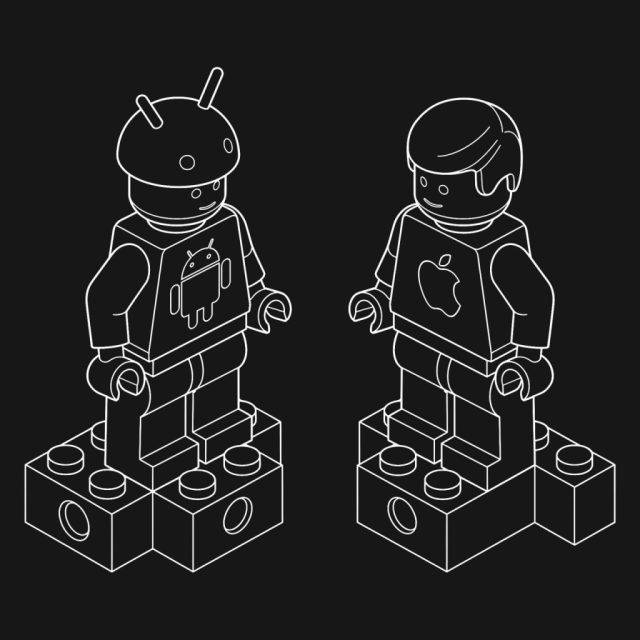
    Black and white Lego figures representing Android and iOS platforms bumping smartphones on a futuristic city bridge, symbolizing the comparison of native vs. cross-platform app development.

    The Core Differences in Native vs. Cross-Platform App Development

    To truly grasp the long-term implications of native vs. cross-platform app development, one must first look at how each programming framework interacts with a mobile device’s internal hardware. Native applications have direct, unmitigated access to device-specific features like the camera, GPS sensors, and microphone without needing an intermediate software bridge. However, modern coding frameworks have evolved significantly, making the performance gap in native vs. cross-platform app development much narrower when it comes to smoothly accessing these vital hardware components.

    User experience is another critical battleground in the ongoing arena of native vs. cross-platform app development. Traditionally, native applications were heavily celebrated for their buttery-smooth screen animations and platform-specific interface design rules. Today, a well-executed cross-platform app development guide will demonstrate that modern tools enable developers to deliver a user interface that is virtually indistinguishable from a natively built application, fundamentally shifting the traditional paradigm of native vs. cross-platform app development.

    Post-launch maintenance and software updates also play a massive role in evaluating the true cost of native vs. cross-platform app development. When maintaining native applications, organizations are forced to update two entirely separate codebases, effectively doubling the workload for every minor bug fix or major feature rollout. In stark contrast, the unified model simplifies this massive headache by allowing simultaneous updates across all platforms, an advantage that often tilts the strategic scales when comparing native vs. cross-platform app development.

    Cost and Time Implications

    Financial considerations are frequently the final deciding factor when project stakeholders debate native vs. cross-platform app development. Because the native route requires hiring specialized developers for both the iOS and Android ecosystems, the associated labor costs can quickly skyrocket well beyond an early-stage startup’s financial reach. Bessa Community Apps recognizes this barrier to entry, which is why typical project costs generally range from $1,500 to $3,000, making the unified approach highly accessible. Thus, evaluating the budget heavily influences the outcome of any native vs. cross-platform app development decision.

    Time to market is equally vital for new digital products, and here, the dynamics of native vs. cross-platform app development present a very stark contrast in efficiency. Writing one single codebase instead of two drastically accelerates the entire development lifecycle, allowing anxious innovators to validate their ideas in the real world much faster. This impressive speed is a central theme in any effective cross-platform app development guide, as getting to the app marketplace quickly often dictates a product’s initial user adoption, further highlighting the importance of understanding native vs. cross-platform app development.

    Why Innovators Choose the Cross-Platform Route

    Entrepreneurs and startup founders often operate with lean operational teams and highly limited venture capital, making their perspective on native vs. cross-platform app development highly pragmatic. It is common to hear them say that their app idea is great, but figuring out the “Now what?” requires strategic decision-making to maximize their financial runway. For these trailblazers, the logical choice within the scope of native vs. cross-platform app development leans heavily toward scalable solutions that offer maximum market reach with minimum redundant effort.

    By partnering with a dedicated firm or freelancer that offers a comprehensive end-to-end process, from ideation to app distribution, founders can easily bypass the severe headaches usually associated with native vs. cross-platform app development. They require a reliable, solution-oriented approach that is consistently reassuring and client-focused, seamlessly positioning the developer as the problem-solver while keeping the client as the celebrated hero. In this highly supportive context, navigating native vs. cross-platform app development becomes much less of a technical barrier and much more of a strategic stepping stone.

    Organizational Benefits in the Native vs. Cross-Platform App Development Discussion

    For non-profits, established businesses, and educational institutions, the requirements driving their view on native vs. cross-platform app development focus heavily on internal utility and external accessibility. These diverse organizations often deploy communication tools meant to be used on a wide array of unpredictable employee or constituent personal devices. Therefore, opting for a unified codebase rather than juggling the immense complexities of native vs. cross-platform app development ensures that everyone within the organization has equitable access to the digital tools they need.

    Bessa Community Apps deeply values inclusivity and empathy, actively ensuring that these organizational applications serve diverse, multi-device user bases effectively. When an educational institution evaluates native vs. cross-platform app development, they must carefully consider students using older, budget Android phones alongside those equipped with the latest, premium iPhones. Recommending a single, robust technological solution aligns perfectly with a comprehensive cross-platform app development guide, vastly simplifying the daunting task of choosing between native vs. cross-platform app development.

    Building Communities Through Cross-Platform App Development Strategies

    Communities seeking modern digital tools to foster connection, coordinate local events, and drive collective action face highly unique challenges in the complex realm of native vs. cross-platform app development. The overarching goal for these social groups is seamless, frictionless interaction, which means the custom application must perform reliably for every single member, regardless of their preferred mobile operating system. This specific inclusive requirement almost always settles the debate of native vs. cross-platform app development heavily in favor of cross-platform frameworks.

    Bringing varied groups of people together digitally requires a strong commitment to innovation, curiosity, and creativity, core values that are deeply embedded in Bessa Community Apps’ daily methodology. When a passionate community leader is bogged down by the highly technical debate of native vs. cross-platform app development, they seriously risk losing critical momentum for their underlying social cause. Providing a straightforward cross-platform app development guide empowers them to focus entirely on community building rather than getting hopelessly lost in the technical weeds of native vs. cross-platform app development.

    The End-to-End Journey: Simplifying Native vs. cross-platform App Development

    Because most clients engage during the crucial ideation and concept generation stage, this period serves as the perfect time to address the realities of native vs. cross-platform app development. At this early phase, digital ideas are highly fluid, and outlining a concrete technological plan is essential to effectively move clients past the familiar feeling of being immobilized. An expert development partner uses this preliminary stage to honestly break down the pros and cons of native vs. cross-platform app development, meticulously tailoring the engineering strategy to the client’s specific creative vision.

    The software development journey doesn’t suddenly end with coding; it extends fully into App Store (Apple and Android) Distribution and ASO. Managing these final, critical steps can be daunting for newcomers, but making the right architectural choice in native vs. cross-platform app development ensures that the final digital product natively meets the stringent technical guidelines of both major marketplaces. This seamless, guided transition is a foundational cornerstone of the professional services offered by Bessa Community Apps, demonstrating exactly why resolving the native vs. cross-platform app development question early is so remarkably critical to the timeline.

    Conclusion

    Ultimately, Bessa Community Apps’ mission is to transform bold ideas into custom cross-platform solutions, safely guiding innovators, organizations, and communities from initial ideation through to a successful launch. To achieve this goal, thoroughly understanding the technical trade-offs inherent in native vs. cross-platform app development is an unavoidable, yet highly educational, first step. By leaning on an approach that is human-centered, modern, minimal, and high-tech, clients can confidently and securely navigate the complexities of native vs. cross-platform app development.

    Stop dreaming, start launching. Whether you are a bootstrapping startup founder or a passionate community organizer, utilizing a trusted cross-platform app development guide will easily illuminate the most efficient, cost-effective path forward. The ongoing discussion surrounding native vs. cross-platform app development doesn’t have to be a frustrating roadblock; instead, let it be the strategic catalyst that turns your incredible concept into a thriving reality, proving once and for all that the right choice in native vs. cross-platform app development leads directly to long-term success.